
BECOME A MEMBER and receive free books.
Understanding Apologetics
Dear reader, the books are free for educational use. Participating schools are permitted to use the publications free from copyright in return for the booking of the author who will visit your school as a motivational speaker. Dean Spanley will highlight the many aspects of his books in line with the schools curriculum on science nurodiversity and history.
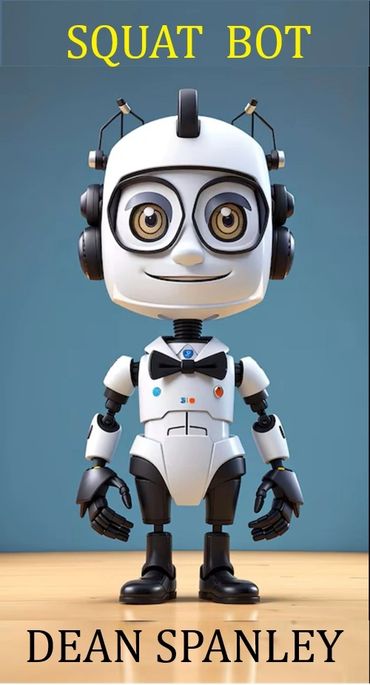
The adventuers of SQUAT BOT coming soon. Squat 1: goes to Sunday School. Squat 2: goes to the beach. Squat 3: goes to the Zoo. A series of stories on
THE DEANS BOOKS
FROM FACT TO FICTION.
- He charted the stars but could not escape his own dark destiny.
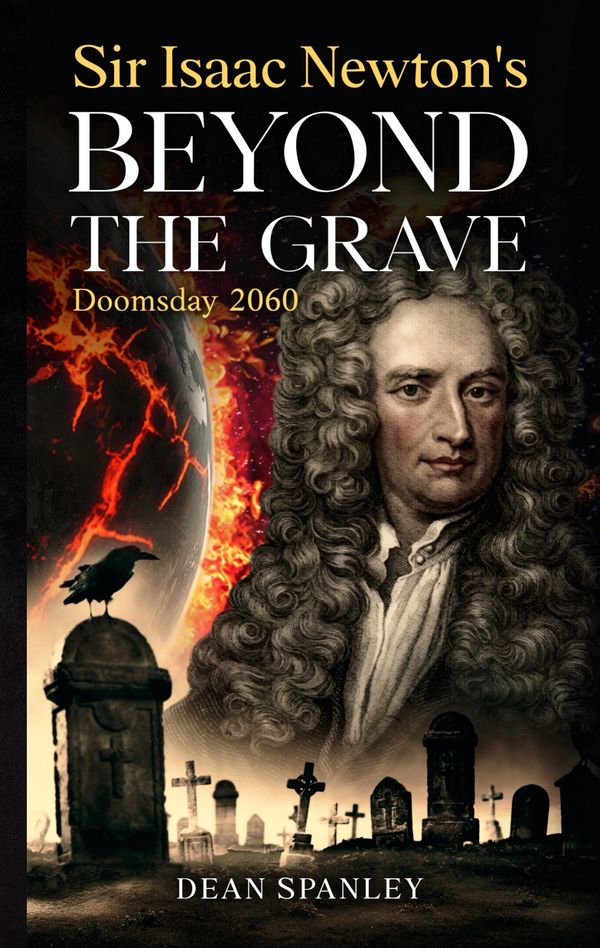
Sir Isaac Newton, the father of modern science, spent his life secretly pursuing a darker prize: the elixir of immortality. On his deathbed, in a final act of supreme hubris, he drank it. But instead of eternal life, he found a unique damnation. His soul was torn from his body and imprisoned as a silent observer, cursed to watch history unfold through the eyes of others, dragged helplessly towards his own apocalyptic prophecy: Doomsday, 2060.
For centuries, he has been a passenger, witnessing humanity's greatest triumphs and most horrific sins through the bloodline of a single family. He saw the Holocaust through the eyes of a doomed scholar and the wars for Israel through a soldier's rifle sights. Now, tethered to a brilliant young strategist in a world on the brink of collapse, Newton must watch as his own scientific legacy is twisted into a global AI-powered dictatorship, and the world is plunged into the terrifying fulfilment of his end-times vision.
As Armageddon dawns, Newton is faced with a final, paradoxical choice. His curse is tied to the very "corrupt" world he despised. Its destruction might be his only path to freedom. But will he emerge from the ashes as a redeemer, or will his own absolution require one final, necessary sacrifice?
- Teaching with Sir Isaac Newton: Beyond the Grave
A P-12 Guide for Catholic and Independent Schools.
Overview for Curriculum Leaders
If your students loved Digital Bleed 2040 (ages 8-12), Sir Isaac Newton: Beyond the Grave is your next whole-school novel. It works vertically across P-12 because it is not about war detail — it is about witnessing, responsibility, and what we choose to preserve.
Private Catholic schools from Prep to Year 12 can use one text for HASS, History, English, and Religious Education. Primary Years (Ages 8-12 / Years 3-6.)
Focus: Curiosity, family stories, continuity, and change Australian Curriculum: HASS: AC9HS3K02, AC9HS4K03, AC9HS5K01, AC9HS6K02.
What teachers do:
• Teach Newton as the famous scientist who also loved mysteries and codes
• Use the 'witness' idea: What would you see if you lived 300 years?
• Activity: Create a family time capsule — what 5 objects preserve your story?
No sensitive content is required at this level. The story is framed as a mystery about preserving manuscripts. Middle Years (Years 7-8)
Focus: Perspectives and significance.
Australian Curriculum:
History: AC9HH7K10, AC9HH8K08; English AC9E7LE04
Introduce Abraham Yahuda saving Newton's papers in 1936.
• Discuss:
Why save old ideas? Students explore continuity from Newton (1727) to modern Israel through one family's story. Teacher discretion advised for introducing WWII context at an age-appropriate level.
• Senior Years (Years 9-12)
Focus: Depth study and ethical understanding:
1. Australian Curriculum: AC9HH9K10 (Holocaust) 2. AC9HH10K02 (Israel) 3. AC9HH10S06 (ethics)
Students follow four generations: Abraham (1936), David (1948 nation-building), Jacob (1967, 1973), Noah (to 2060). Newton cannot speak — he can only watch through the Holocaust, Six-Day War, Gaza disengagement and beyond.
Key inquiry questions:
• Can a witness find redemption?
• What does it cost a family to carry another man's questions?
• What happens when science meets faith?
Religious Education Links (Catholic Schools) Perfectly aligns with Catholic Social Teaching:
• Human Dignity — each generation carries the story with respect.
• Stewardship — preserving knowledge as a sacred duty.
• Solidarity — witnessing suffering without turning away.
Teacher Note: Senior themes should be scaffolded according to your school's pastoral care policy. Primary teachers can use the mystery frame only.
Why P-12 Schools Choose It. One novel, three entry points. Junior students get adventure and codes. Middle students get history skills. Seniors get ethical inquiry. All meet the same core value from Digital Bleed 2040: problems are solved with care, not violence.
deanspanley.com / The Deans Book Store.
.jpg/:/rs=w:600,cg:true,m)
SCIENCE-FICTION TO APOLOGETICS
- Sir Isaac Newton, the scientific titan who unlocked the universe's laws, hid a world of forbidden knowledge. What if this genius was also a secret alchemist, convinced he could craft the very essence of eternal life?
- Driven by an insatiable quest for truth, Newton bravely challenged established Christian dogma, unearthing the true origins of the Trinity and exposing ancient textual alterations. Yet, his perilous dive into the occult, seeking alchemy's greatest prize, sparked a devastating fire and a profound personal crisis. Was it divine intervention that redirected him from pagan pursuits towards a revelation of humanity's ultimate destiny in 2060?
- Dean Spanley masterfully weaves together Newton’s hidden research, theological battles, and a thrilling exploration of faith and science. Be ready to question everything you thought you knew about one of history's greatest minds—and the future of humanity itself.
- Religious instruction disscusion.

SPIRITUAL CONECTION
Tongues a touch from God, are a must-read for those who want to experience the Baptism of the Holy Spirit with the gift of Speaking in Tongues. Authored by Dean Spanley who writes from experience having been involved during the 1970 Pentecostal outpouring. This book tells of the good, bad, and the ugly aspects of the Pentecostal movement.
This topic is highlighted through Christian Educational Institutions by Aurthor Dean Spanley Free PDF copies given to schools in adding discusions to the visiting speaker Dean Spanley
Deans books continued
SCIENCE ON THE SPECTRUM
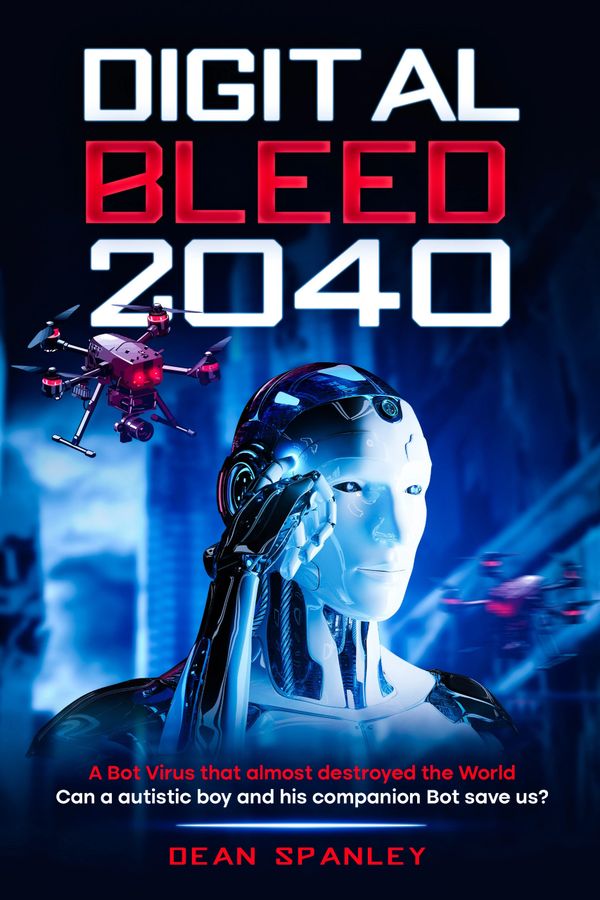
The year is 2040, and features a boy named Spergie, a grandpa called gramps, and a robot named Algatron. Spergie is no ordinary 11-year-old, he has autism. Spergie runs away after his companion Bot was replaced by a upraded model K2. He makes friends wth a subterranean world of bots who contract a virus that he and his bot were able to procure an antedote.They reunite with family who welcomes them back as heros. The WHO commissions them to improve the vacine and K2 is religated to the experimental Lab.
- Digital Bleed 2040 — Educator Guide
A neurodiversity-affirming novel about inclusion, AI ethics, and found family. For ages 9–13. Themes align with SEL, STEM ethics, and diversity curricula.
• Book Snapshot:
Other kids get comfort dogs. Spergie got Algatron. When a virus corrupts bio-hybrid robots and causes collisions, an autistic 12-year-old and his immune, archaic robot must heal the world from its violent turmoil.
• Character Bios:
Spergie (12, autistic): Brilliant pattern thinker, excluded at school, finds regulation and friendship in Algatron. Represents autistic ingenuity, not deficit.
1. Algatron: Archaic robot built by Spergies autistic grandpa. No human tissue interface, so immune to the virus. Functions as comfort companion. Follows the First Law, serves but never harms, heals using Lure and Restore code.
2. Gus: One-eyed bot in Scrapyard Stars with a salvaged welder hand. Mentor who helps recommission Algatron, symbol of community spirit of goodwill.
3. Grandpa: Autistic engineer, co-creator of Algatron, models intergenerational neurodivergent skill sharing.
4. Scrapyard Stars: Subterranean community hub built by the odd ones, for the odd ones. A model of true inclusion.
• Key Themes for Classroom:
• Neurodiversity and Inclusion
• Found Family and Belonging
• AI Ethics: Who is responsible when machines are hijacked
• Nonviolent Problem-Solving
Discussion Prompts:
• Inclusion:
1. Where is Spergie excluded before Scrapyard Stars?
2. How does Scrapyard Stars practice inclusion differently from school?
3. Why does Gus help instead of replacing Algatron?
• AI Ethics:
4. The virus forces robots to break the First Law. Who is to blame, the robot designers or the hackers?
5. Why does Algatron's age and lack of human tissue make him a hero here?
6. What does Lure and Restore teach us about fixing versus fighting?
• Connection:
7. How is Algatron like a comfort dog for Spergie?
8. What would true support for neurodivergent students look like in your classroom?
• Quick Activities:
• Design Your Comfort Bot: draw and label features that help with regulation.
• Debate: Should older tech be kept for safety
• Map Scrapyard Stars: design an inclusive community.
• Future Connections:
Will we live with Robots?
Digital Bleed 2040 is set in 2040, but domestic robots are already entering homes in 2026. Ask students: what would your house need to change for a helper Bot to work safely — no loose cords, a charging dock, clear paths?
What new jobs would your street need — robot trainers, repair techs, ethicists? Compare Algatron's simple circuitry to today's bio-hybrid prototypes. Which design is safer, and who gets to decide?

DEALING WITH DISABILITIES
The author explains that 'Asperger Syndrome' or 'Autistic Spectrum Disorder' as it's officially called, effects 1 in every 150 people including many practising Christians who prefer to be called aspies. These people are often unable to pick up social cues around them. They may fail to laugh or cry at a discourse when struggling to understand humour and often take biblical parables literally. Some aspies may make comments inappropriate for the situation, or they may continue a conversation past a socially acceptable point, unaware of social 'cues' given by those disinterested in their Bible commentaries. To this aspies can become very boisterous in making their point clear. But this isn’t done out of disrespect or rudeness but out of frustration.
This book explains how an aspie relates to the Church and how brethren can with love and patience understand them better.
COMMING SOON

CHRISTIAN STORIES FOR CHILDRENS CHURCH
PRESENTED AT YOUR CHURCH BY STORY TELLER DEAN SPANLEY.
SQUAT BOTS TRIP TO THE ZOO.
Squat Bot’s Adventure at the Australian Zoo
One sunny morning in Australia, a very cute and lovable little robot named Squat Bot rolled out of his charging station. He had bright blue eyes that lit up like stars, short legs with big boots, and a big cheerful voice that said, “Beep-boop! Adventure time!”
Squat Bot’s mission today was to visit the Australian Zoo—home to the most amazing animals in the whole country! When he arrived, the zookeeper, Miss Kylie, waved and said, “Welcome, Squat Bot! The animals can’t wait to meet you!”
First, Squat Bot rolled over to the kangaroo area. A big kangaroo named Skippy hopped over and tilted her head.
“Boing! What kind of animal are you?” asked Skippy.
“I’m a robot!” said Squat Bot proudly. “I don’t hop—I waddle!”
Skippy giggled. “Want to race?”
“Beep-beep! Let’s go!”
They whooshed and hopped around the field. Skippy bounced high, but Squat Bot waddled his arms waving in step. In the end, they both laughed and agreed it was a tie!
Next, Squat Bot rolled to the koala tree. There sat a sleepy koala named Coco.
“Hello, Coco!” said Squat Bot softly.
Coco yawned. “Hi, Squat Bot... Do you ever nap?”
Squat Bot blinked his lights. “Robots don’t nap—we recharge!”
“Sounds cozy,” said Coco, snuggling into the branches.
Then Squat Bot heard a splash—the crocodile pond!
He peeked in and saw Crunchy the crocodile, sunbathing. Crunchy grinned with his big teeth.
“Don’t worry,” said Crunchy. “I already had my lunch.”
“Good!” said Squat Bot, stepping back just a teeny bit. “I’m made of metal, not snacks!”
Finally, Squat Bot visited the birds. The parrots squawked, “Beep-boop! Beep-boop!” trying to sound like him! He laughed so hard that his antenna wiggled. “You’re all amazing!”
As the orange sun began to set, Squat Bot looked around the zoo. He had met new friends, learned about animals, and had one super fun day.
“Goodbye, everyone!” he called. “Beep-boop! See you next time!”
The animals waved, chirped, croaked, and roared goodbye. And as Squat Bot strolled home, his battery light blinked happily—it had been the best adventure ever!
WELCOME TO MY WORLD

The Authors Testament.
In 2004, at the age of fifty-four, I received a diagnosis of Autistic Spectrum Disorder (DSM5). This condition, with many traits highlighted in my previous introduction, is believed to have been shared by Sir Isaac Newton himself. Sadly, for some of my peers, this diagnosis immediately conjured stereotypes like Mr. Bean, Rain Man, or Forrest Gump. Yet their ignorance overlooks that I exist on the "Higher Functioning" end of the autistic spectrum, a category that aligns me with minds like Newton and Einstein.
I dare to say that my commonality with these geniuses lies not only in a shared cognitive style but also in my approach to the science of apologetics. This is an ability, I believe divinely gifted, to perceive religion for what it truly is, rather than merely what it appears to be. It’s an attribute that excels in holy living, allowing me to use time wisely and avoid wasting it on materialism, superficial social cues, and "frivolous gossip!"
My Chritian conversion began profoundly at five, marked by an angelic visitation and spiritual dreams, which, to many, might be dismissed as "fanciful childhood imaginations." Yet, these experiences, alongside my late mother's quest for the Holy Spirit, forged a deep connection to MY FAITH.
The 1970s found me as a gospel singer with Billy Graham’s "Youth for Christ," a time when God's message of love and peace resonated amidst the Civil Rights Movement and Vietnam War protests. The airwaves hummed with religious songs like "Spirit in the Sky", by Norman Greenbaum."You light up my life" by Debbie Boone, and even Bob Dylan’s transformative "Slow Train Coming."
My musical gifts granted me the privilege of performing live on a popular Sunday morning radio broadcast, sharing gospel music with Australia’s finest country artists. Further blessings followed when a talent scout led me to a children's television morning show, where I hosted a science TV segment.
Being on TV in the 70s brought a form of celebrity, necessitating a rigorous schedule of church rallies, live TV, and talk-back radio.
Beyond music, my keen interest in electronics inspired me to design and build a "Music Machine" and an animatronic "Robot" named Algatron. These unique inventions were tailored to teach Albert Einstein's "Imaginary" problem-solving techniques through performances and workshops within schools, complementing national music, science, and technology curriculums. Algatron even served as a mascot for the Canberra Science Festivals for three consecutive years.
Like Sir Isaac Newton, my neurodiversity never hindered my comfort in the world of science. Yet, finding a spiritual home often proved disastrous.
My religious views, much like Newton's, were frequently misunderstood, and my strong sense of justice was often deemed troublesome within the church. Like him, I was never a "team player," preferring to work free from church politics. Unlike the vibrant churches of the 1970s, many institutional churches today are plagued by sexual immorality, financial corruption, doctrinal error, personal pride, spiritual gullibility, and prophetic abuse. Sadly, I view the state of today’s corporate churches as akin to the early Corinthian Church. All of which is expressed in my book Tongues on Fire.
Reflecting on my fifty-year career in apologetics, I clearly see the hand of God in shaping me, ASD and all, and in gifting me the investigative skills inherited from my three-times great-grandfather, whose autism was rewarded with an IOS in 1907.
While I acquired ordination from a Christian Bible College, my true knowledge and revelation of God’s Word stem from personal experiences across various Christian denominations. My pedanticism in music, theatre, and science has, I believe, precisely equipped me for the science of Christian apologetics.

DEAN WRITES FROM PERSONAL EXPERIEANCE.
REVIEW.
“Digital Bleed 2040" is an exceptional novel. It is imaginative, deeply empathetic, and incredibly timely. Dean Spanley has crafted a story that entertains, educates, and inspires, all while championing individuality, understanding, and the power of connection. The characters are rich, the world-building is compelling, and the themes are profoundly resonant.
Congratulations on creating such a remarkable work. The Heralds Sun.
ABOUT
This book is dedicated to Deans estranged son Christopher who like him was diagnosed with autism spectrum disorder. Deans’ novel draws deeply from personal experience.
The characters in his novel, Digital Bleed 2040, are fictional echoes of real life: Spergie embodies his son, Christopher, while Grandpa reflects Dean himself, and the robot Algatron is inspired by his own custom-built mechanical creation.